Music Piano 2: KPop Star
- 4.5
- Rating
- 1.00M
- Installs
- Free
- Price

 Analysis by App-foxy
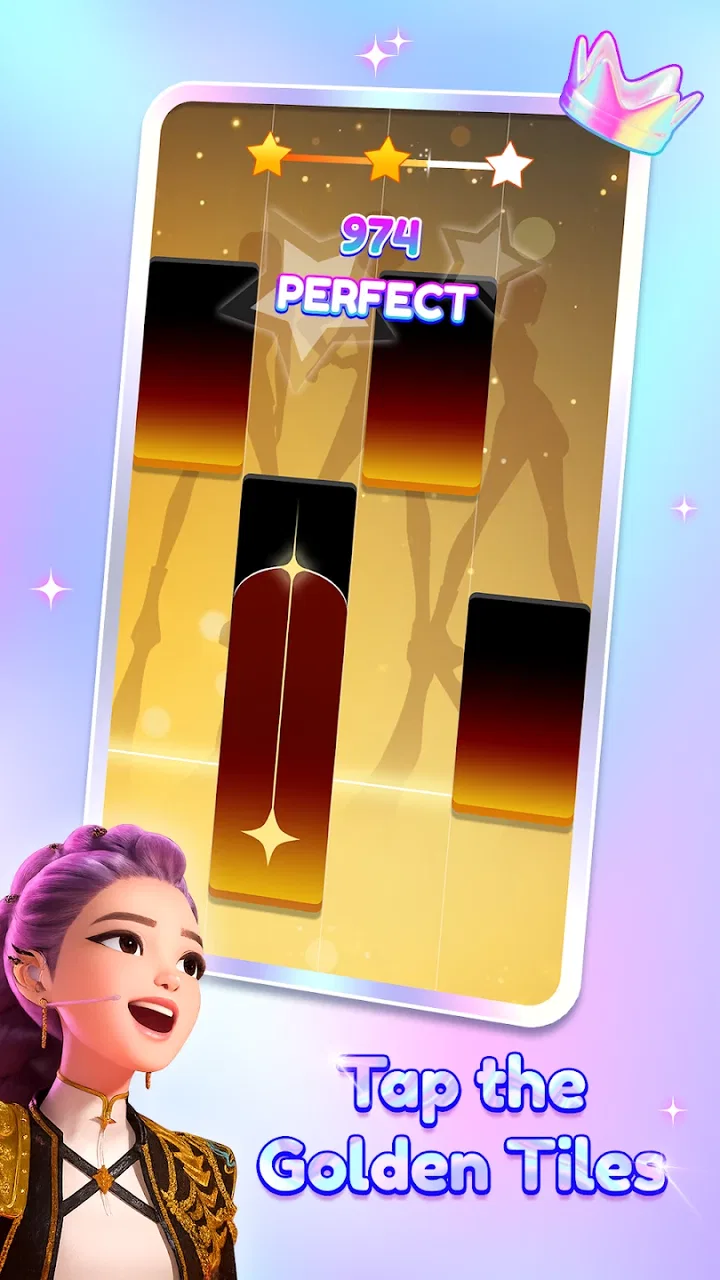
I started Music Piano 2: KPop Star expecting a simple tap-along game, and that is exactly where its appeal begins. The first action is easy to understand: listen for the musical flow and tap the piano-style notes as they arrive. There is no complicated setup to learn, so I could begin playing almost immediately instead of spending time in menus or tutorials. That makes it a natural choice for a short break, especially when I want something more active than scrolling but less demanding than a full strategy or action game.
Developed by HyperMusic, this free casual game is built around K-Pop songs and quick musical reactions. Its store summary describes the experience in a few words, but the important part for me is how clearly the game connects what I hear with what I do. A note appears, I respond, and the game tells me whether my timing worked. That direct relationship gives each song a small sense of performance, even though the controls remain accessible enough for an Everyone-rated audience.
The game has reached over a million installs and holds a 4.5 average from around five thousand ratings, which suggests that its straightforward format has found a sizeable audience. I can also see why: it does not ask me to understand a complicated ruleset before I have fun. The current version is 1.0.22, and the game is free to play on devices running Android 7.1 or later. Those details make it approachable, but the real question is whether the tapping loop stays enjoyable after the novelty of the first song fades.
You May Also Like

 Blood Strike: 2.5 Anniversary
Blood Strike’s Loadouts Turn Every Drop Into a Tactical Gamble
A close look at Blood Strike’s custom loadouts: how fast access to signature weapons reshapes its battle royale rhythm, rewards preparation, and narrows the gap between fights.

 Pandora - Music & Podcasts
Pandora’s Music Is Easy to Start, but Harder to Recover
Pandora’s strength is its low-effort path from a seed to a station. Its weak spot is how much confidence it asks you to place in connection, setup, and quiet recovery.

 8 Ball Pool
 Is Built on Rivalries, Rematches, and Routine
A close look at the rivalries, rematches, shared routines, and unanswered safety questions that turn a quick pool match into a persistent mobile community.

 Samsung Music
’s Quiet Strength Is Playing What You Already Own
Its reach comes less from spectacle than from dependable access to a personal library. That simplicity is both the app’s strongest retention engine and its ceiling.

 AccuWeather: Weather Radar
AccuWeather Review: A Quick, Clear Forecast for Everyday Decisions
For everyday plans, the best forecast is the one you can understand quickly. AccuWeather makes rain timing, radar, and local conditions easy to act on, with a few trade-offs.

 Hill Climb Racing
Why Hill Climb Racing Still Turns Crashes Into One More Run
A tiny car, a bumpy hill and one more upgrade: Hill Climb Racing keeps resurfacing because its simple chaos makes every near-miss feel personal.
More From Our News Desk



How the tap, feedback, and reward loop works
I focus on the moment-to-moment loop here: a musical cue gives each tap its purpose, while immediate feedback helps me tell whether I’m keeping pace or drifting. I find it more useful to treat a miss as a timing clue than as a reason to rush the next note. That makes the reward feel earned through attention, and it leads naturally to how I approach each new attempt.
The first action is deliberately simple
The strongest part of the opening experience is its low barrier to entry. I do not need musical training to understand the objective. The piano presentation gives the game an immediate identity, while the K-Pop focus provides the energy that keeps the screen from feeling like a silent reflex test. I can pick it up with one hand, make a few taps, and understand the basic challenge without reading a long explanation.
That simplicity is useful in everyday situations. Imagine waiting for a friend at a café with only a few minutes to spare. A traditional rhythm game with several modes, equipment choices, or long stages may feel like too much commitment. Here, the first tap gets me into the action, and the next one gives me a reason to continue. The game suits those small gaps in the day because it does not require a large preparation ritual.
At the same time, the uncomplicated controls create a clear trade-off. Players who want deep rhythm-game technique may find the opening too gentle. This is not the right choice if your main goal is to practice an instrument, learn music theory, or master a highly technical note chart. It is closer to a casual musical reflex game: easy to start, quick to understand, and designed around the pleasure of keeping a sequence going.
Timing creates the main feedback rhythm
Once a song begins, the game’s feedback becomes the center of attention. Every successful tap feels like confirmation that my eyes and ears are working together. When I miss, the mistake matters because it interrupts the feeling of flow. That immediate response is more effective than a score shown only at the end; I know during the song whether I am keeping up or losing concentration.
I found that the best way to play is not to stare at one note in isolation. I watch the movement of the upcoming sequence and let the music guide my pace. Looking only at the point where I need to tap can make me react too late, while listening without watching can leave me guessing. The useful middle ground is to treat the screen and soundtrack as two parts of the same signal.
This also gives the game a small learning curve without making it feel like formal training. My first attempts were about surviving the pattern. After that, I started anticipating the next action instead of waiting for each note to surprise me. That change is subtle, but it makes another attempt feel meaningful. I am not unlocking a new genre of gameplay; I am improving my ability to follow the particular rhythm in front of me.
A practical tip is to avoid tapping faster simply because a section feels exciting. In rhythm games, excitement can make me rush ahead of the beat. I get better results when I keep my hands relaxed and let the visual timing decide when to move. If the display feels busy, focusing on the next few notes rather than the entire sequence helps reduce panic and keeps the response consistent.
Why the reward feels personal even when the rules are light
The reward in Music Piano 2: KPop Star is not only the final result. It is the feeling of completing a section cleanly after struggling with it a moment earlier. A successful run gives me a compact sense of accomplishment because the improvement is visible in my own hands. The game does not need a complicated narrative to make that progress satisfying; the song itself becomes the challenge, and better timing becomes the reward.
This is where the K-Pop theme matters. Familiar musical energy can make repetition feel less mechanical than tapping through abstract shapes. I am more willing to replay a section when the soundtrack gives the attempt personality. The game’s identity comes from combining that musical atmosphere with a piano-like interface, rather than presenting the taps as plain buttons or generic targets.
Still, the reward is best understood as short-term motivation. I would not recommend installing it expecting a large progression system comparable to a role-playing game. Its pleasure comes from immediate performance: tap, react, finish, and decide whether the last result deserves another try. Players who need extensive customization, long-term character development, or a substantial story may prefer a different kind of casual game.
For me, the most useful way to approach it is to set a small personal target before beginning. I might try to complete a song without losing concentration, improve the weak part of a previous attempt, or simply play one track during a break. That keeps the reward concrete. Without a small goal, repeated attempts can start to feel like the same action with a slightly different outcome.
The reset is what makes another session tempting
After a mistake or a finished attempt, the game naturally creates a reset point. I can put it down without feeling that I have abandoned a long commitment, then return when I want another quick challenge. That reset is important because the game’s appeal depends on repetition. The loop only works if starting again feels easy rather than tiring.
There is a psychological difference between replaying because I want to improve and replaying because I feel forced to recover lost progress. This game works better in the first situation. I enjoy another session when I know exactly what went wrong and want to correct it. If I am already distracted, however, the same quick restart can expose the limits of the format: there may not be enough variety in a short sitting to hold my attention indefinitely.
That makes session length a personal matter. I would use it in brief bursts rather than treating it as my main game for an entire evening. A few attempts can feel focused and satisfying, while a much longer run may make the repeated tap-and-retry structure feel predictable. The game is strongest when I leave while the rhythm is still enjoyable and return later with fresh attention.
Another useful habit is to pause between attempts instead of immediately blaming my fingers. A missed sequence can come from rushing, looking too far ahead, or simply losing focus. Taking a moment to identify the problem gives the next session a purpose. That small reset turns repetition into practice rather than random retrying, and it is one of the easiest ways to get more value from the game without needing any advanced knowledge.
Where it fits among casual music games
Compared with a standard piano simulator, this is more clearly a game. I am not using it to produce a melody freely or learn where real piano keys sit. The interface borrows the visual language of piano playing, but the goal is timing and response. Someone looking for a relaxing instrument app should choose a tool built around open-ended playing instead.
Compared with a demanding rhythm title, Music Piano 2: KPop Star feels more welcoming. Its appeal is immediate recognition and manageable interaction rather than a steep technical climb. That makes it better for casual players, K-Pop listeners, younger users, and anyone who wants a musical game that can be understood in moments. The compromise is that experienced rhythm fans may want denser patterns, more control, or a deeper competitive structure than this format provides.
It also differs from ordinary endless-tapping games because the music gives my actions a reason. I am not tapping rapidly just to fill a meter; I am trying to stay aligned with a song. That connection adds concentration and personality. Even so, I would not confuse musical presentation with a full music-learning experience. The game can sharpen attention to timing in a playful way, but it should not replace lessons or serious practice.
Who should install it, and who should skip it
I would recommend it to someone who enjoys K-Pop, likes quick reflex challenges, and wants a free casual game that can be started without preparation. It is particularly suitable for short sessions on a phone, for players who enjoy replaying a level to improve a result, and for people who prefer clear actions over complicated menus. The Everyone age rating also makes its basic presentation broadly accessible.
I would be more cautious about recommending it to players who dislike repetition. The core loop remains focused on tapping to musical timing, so anyone who needs constant mechanical variety may lose interest. It is also not ideal for someone seeking a realistic piano experience, a story-driven game, or a deep rhythm competition. In those cases, a dedicated alternative in the relevant category would be a better fit.
Because the game is free, it is easy to try without making it a major commitment. That does not automatically make it right for every player, though. The real test is whether the combination of song, visual timing, and retrying feels satisfying to you. If the first few attempts make you want to correct a mistake, the loop is doing its job. If the tapping feels repetitive immediately, the simple design is unlikely to change your mind later.
Small habits that improve the experience
I get more consistent results when I play with the phone held securely rather than shifting it between hands during a sequence. Stable positioning makes the visual lane easier to follow and reduces accidental taps. This is a small practical detail, but it matters in a game where a slight movement can break concentration.
I also prefer using a quiet moment instead of playing while a conversation or video competes for my attention. The game is casual, but its feedback depends on noticing both the screen and the beat. Playing while multitasking may be possible, yet it makes missed notes feel random. Giving it even a short period of undivided attention makes the challenge clearer and the improvement more noticeable.
For younger players, I would frame it as a timing game rather than a piano lesson. That sets the right expectation and encourages experimentation without suggesting that tapping the screen teaches proper keyboard technique. For K-Pop fans, meanwhile, the music-centered presentation is likely to be the main attraction, while the score-chasing loop provides the reason to replay.
One limitation I noticed in the overall concept is that the game’s simplicity can work against it after the initial curiosity passes. The first session benefits from immediate clarity, but long-term interest depends heavily on how much I enjoy repeating the musical challenge. This is not a flaw that makes the game unusable; it simply defines the right role for it. I see it as a compact entertainment app, not a forever game that replaces every other activity on my phone.
My verdict on the complete loop
The action-feedback-reward-reset cycle is clean. I tap to the musical cue, receive an immediate sense of success or failure, feel encouraged to improve, and can begin again without much friction. That structure is the reason another session starts: I usually know exactly what I want to fix. The game does not bury that loop under unnecessary complexity, and its K-Pop styling gives the familiar rhythm formula a distinct flavor.
HyperMusic has made a casual game that understands the value of a fast first step. Its free price, broad age rating, and Android 7.1 minimum requirement make it easy for many players to approach, while its strong average rating and large install base show that the format has connected with plenty of people. I would still keep expectations realistic: this is not a full piano course, a deep competitive rhythm platform, or a story adventure.
My honest recommendation is to try it when you want a focused musical distraction rather than a long, complex game. I would keep it for waiting rooms, short commutes, or those moments when I want to test my concentration for a few minutes. The best reason to return is not the promise of endless content, but the simple satisfaction of turning a missed beat into a cleaner run.
In the end, Music Piano 2: KPop Star succeeds because its loop is easy to enter and easy to understand. The first tap creates the challenge, the rhythm supplies the feedback, a better sequence delivers the reward, and the reset leaves the door open for another attempt. If that compact cycle matches what you want from a casual game, it is a pleasant choice. If you need deeper systems or a more realistic musical tool, I would look elsewhere.
FAQs for Music Piano 2: KPop Star
01What are the main features of Music Piano 2: KPop Star?
Music Piano 2: KPop Star offers a unique blend of music and gaming by allowing players to tap along to popular K-Pop tracks. The app includes a variety of songs from top K-Pop artists, customizable piano themes, and multiple difficulty levels, making it suitable for beginners and advanced players alike. The game also features a leaderboard for competitive play.
02Is Music Piano 2: KPop Star free to download and play?
Yes, Music Piano 2: KPop Star is free to download on both Android and iOS platforms. While the app provides a generous selection of free songs, it also offers in-app purchases for additional songs and features. Users can enjoy the game without spending money, but optional purchases can enhance the experience.
03Does Music Piano 2: KPop Star require an internet connection?
Music Piano 2: KPop Star can be played offline, allowing users to enjoy the game without an internet connection. However, certain features like downloading new songs or accessing online leaderboards will require connectivity. For the best experience, an internet connection is recommended to keep the app updated with the latest content.
04Are there any ads in Music Piano 2: KPop Star?
The app does contain ads, which help support the development and maintenance of the game. Ads may appear between songs or when navigating the game’s menu. Users have the option to remove ads by purchasing an ad-free version of the game through an in-app purchase, enhancing the gameplay experience.
05Can I play my own music in Music Piano 2: KPop Star?
Currently, Music Piano 2: KPop Star does not support importing personal music tracks. The game focuses on providing an extensive library of K-Pop songs selected by the developers. The team frequently updates the song list, so users can expect a variety of popular and new tracks to play along with.
Pros
- Intuitive interface for easy learning.
- Wide variety of KPop tracks available.
- Responsive touch controls enhance play.
- Offline mode for uninterrupted practice.
- Customizable difficulty levels.
Cons
- Limited free songs without purchase.
- Occasional ads interrupt gameplay.
- Requires internet for song updates.
- No option for sheet music view.
- In-app purchases can be pricey.

Music Piano 2: KPop Star
Gallery